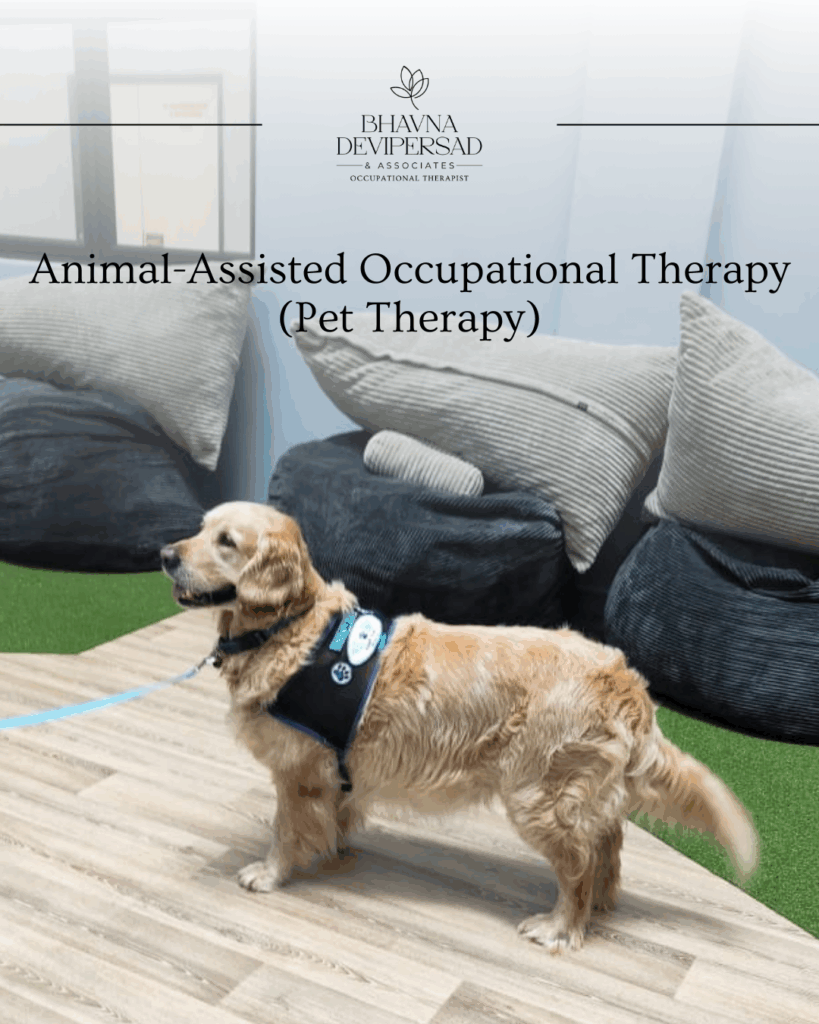
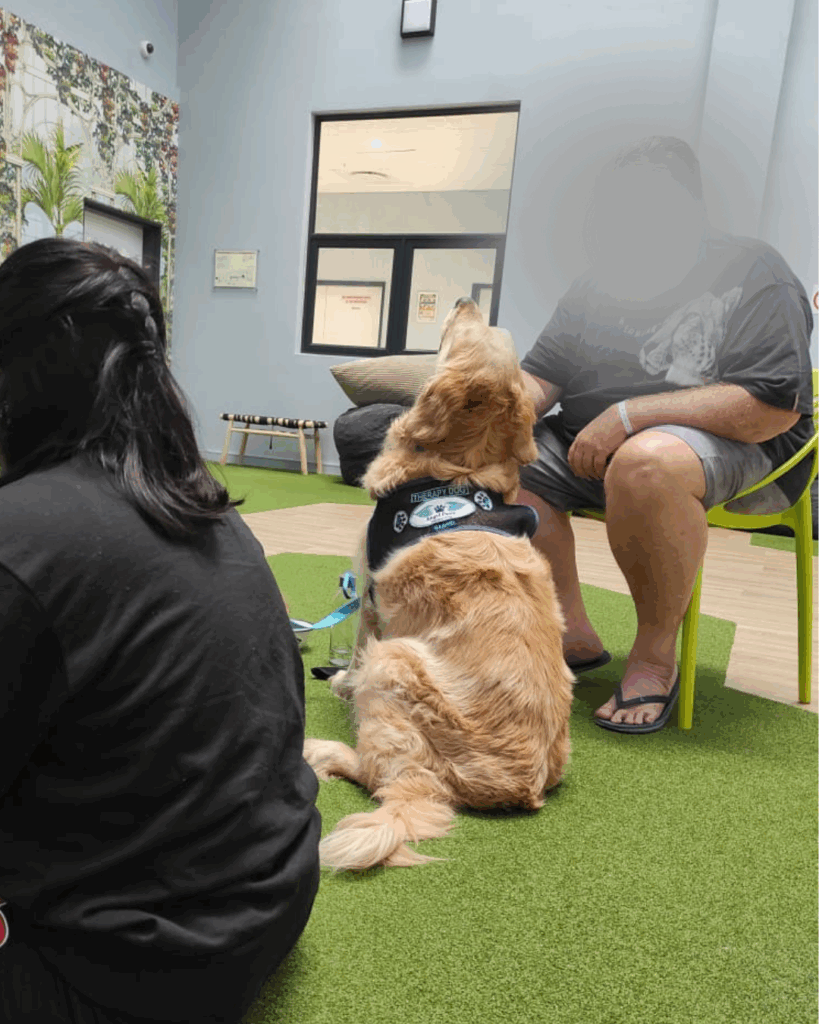
Animal-assisted Occupational Therapy (OT), is also known as pet therapy.
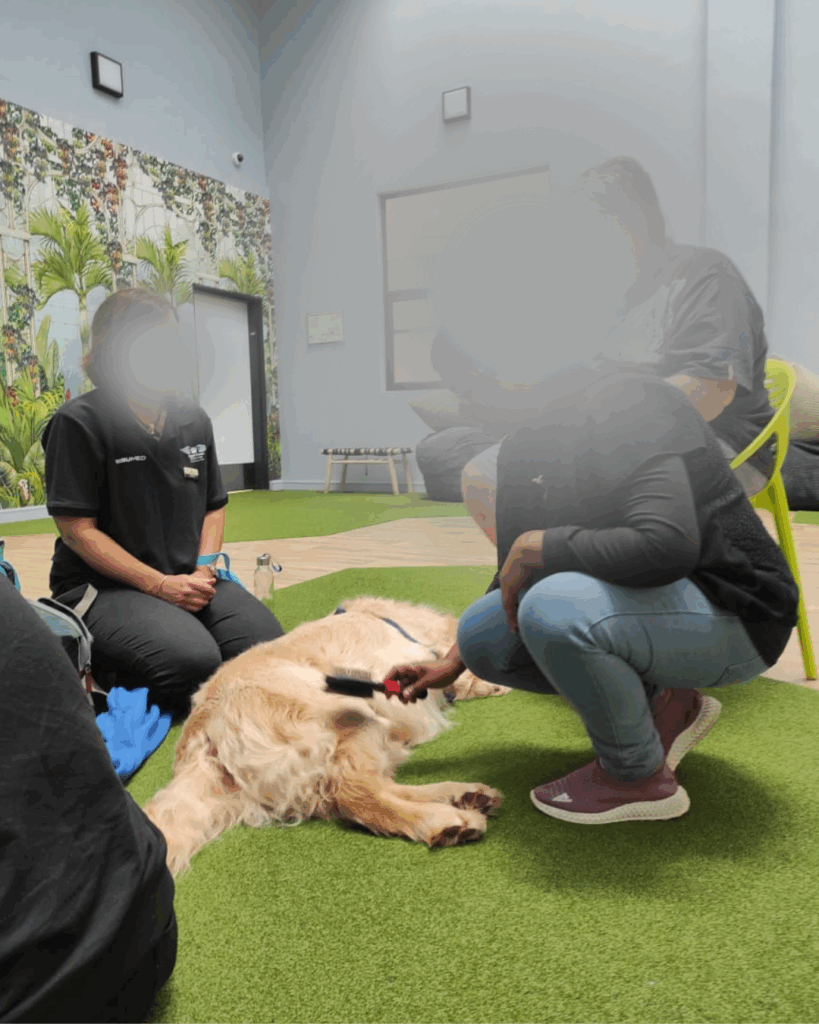
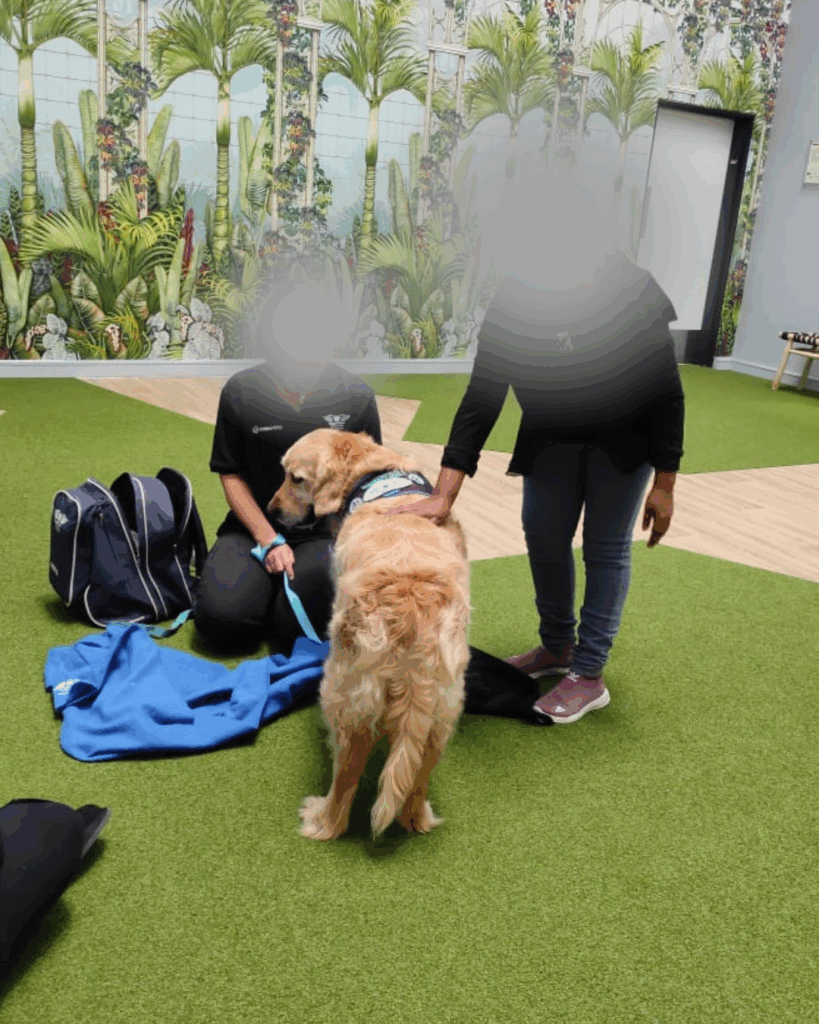
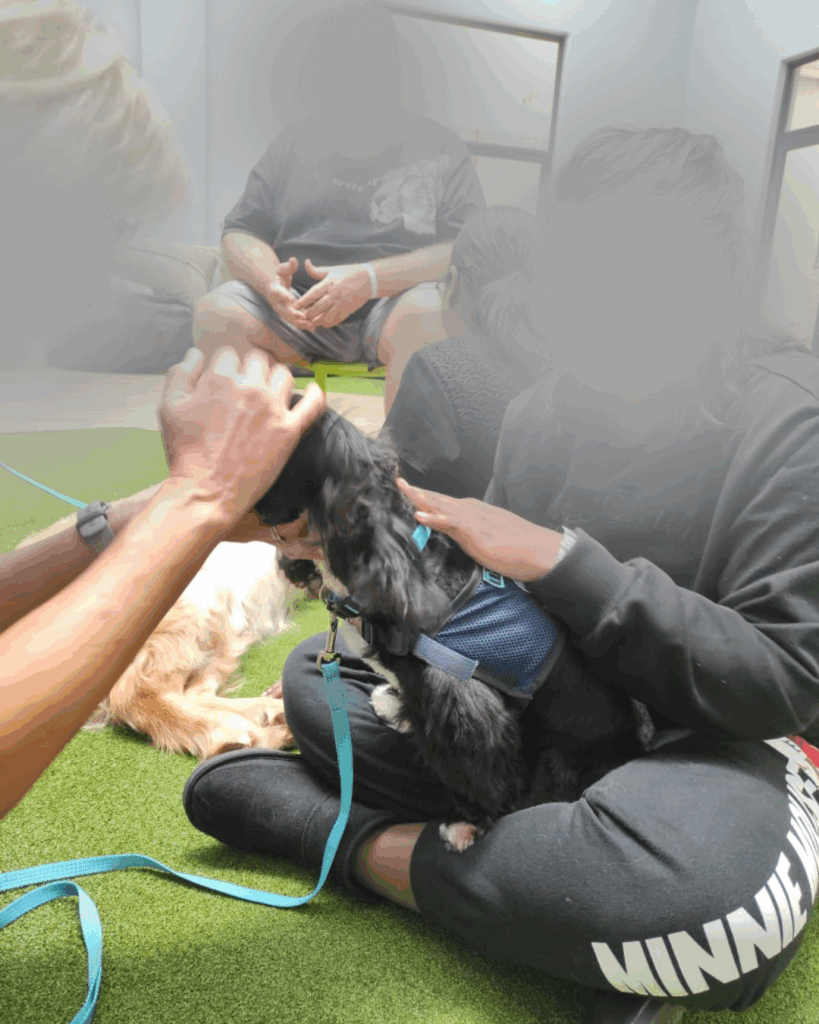
In pet therapy, patients interact with well-trained animals and their handlers under the guidance and supervision of an OT. Being around animals’ have been found to cheer people up.
Touching and interacting with dogs (and other pets) stimulate the release of “feel good” chemicals in our bodies. This can help us become more alert, improve our sleep, and improve our sense of self- esteem and happiness. Simple activities such as watching fish swimming in a fish tank, or petting a cat or dog, have been found to decrease stress and anxiety.
Animal-assisted therapy is one way we can help our patients live happy, healthy lives, as it uses positive relationships with animals to help improve patients’ psychological, emotional, and physical health.
Angel Paws Therapy Dogs is a non-profit organisation currently operating in Kwa-Zulu Natal. They visit a variety of schools and hospitals and have a strict hygiene and health protocol which they follow. Their dogs are bathed regularly, and groomed before visits. Dogs are also checked to ensure that they are in good health and parasite free. They allow safe interactions with trained pets and encourage interaction with their therapy dogs.
Therapy animals are well-trained animals that usually only interact with patients on a short-term basis, like during OT appointments. When they are off the clock, most therapy animals are simply pets.
In animal-assisted therapy, OTs and animal handlers help patients interact with well-behaved pets. This can take place in a variety of settings: hospitals, nursing homes, chemical dependency centres, psychological treatment centres, and even dental offices have found success with animal-assisted therapy.
In some cases, animal-assisted therapy can simply look like patients petting or sitting with dogs or cats. Sometimes animals aid in therapeutic activities through play. These therapeutic interactions with pets often provide unconditional love, affection and acceptance, helping people of all ages feel a greater sense of belonging and feel more connected with the world.
Benefits of AAT include:
- Lower levels of anxiety & depression
- Improved social skills
- Increased feelings of self-esteem & self-efficacy
- Improvements in quality of life
- Lower patients’ blood pressure and heart rate
While there are many benefits, it is important to note that some people may not have a positive experience to pet therapy due to past trauma, allergic reactions, fear of animals or paranoia. Each patient needs to be carefully assessed prior to a session.